Pioneer of ICT infrastructure for Indonesian vocational education. Former Director of Secondary Vocational Education (Dikmenjur) at the Ministry of Education and Director of the SEAMEO Secretariat 2015–2019.
Dr. Ir. Gatot Hari Priowirjanto is one of the architects behind the modernization of vocational education in Indonesia. As Director of Dikmenjur (1998–2006), he pioneered internet penetration across thousands of vocational high schools (SMK) and designed the International-Standard Vocational School (SMK RSBI) program for sectors with global demand — hospitality, tourism, IT, and maritime.
After leading SEAMOLEC, he served as Director of the SEAMEO (Southeast Asian Ministers of Education Organization) Secretariat from 1 April 2015 to 31 March 2019, coordinating the education agenda of 11 Southeast Asian nations. He remains active in advocating the adoption of cutting-edge technologies — Metaverse, Digital Twin, and AI — for Indonesian vocational education.
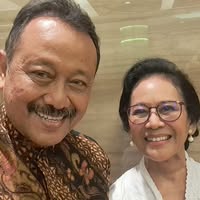
Ministry of Education and Culture, Republic of Indonesia. Pioneered ICT infrastructure for SMK and initiated the SMK RSBI program.
Led the Southeast Asian regional center for open and distance learning, based in Jakarta.
Coordinated education policy across 11 SEAMEO member states, including the organization's 50th anniversary commemoration in 2015.
Actively promotes the adoption of Metaverse, Digital Twin, and immersive technologies for secondary vocational education.
Pioneered internet connectivity and computer labs to thousands of vocational schools across Indonesia since the late 1990s.
Designed the International-Standard School program with a target of 10% of graduates working in global industries.
Led the SEAMEO Secretariat 2015–2019, coordinating the education agenda of 11 Southeast Asian nations.
Awarded by the SDM-IPTEK Foundation for contributions in basic sciences and education.
State honor for long-term dedication as a civil servant in the education sector.
Initiator of the program to produce SMK graduates with "blue cards" — those capable of creating their own jobs.
School costs can actually be covered if the school is creative and maximizes its own production units.
— Dr. Ir. Gatot Hari Priowirjanto